
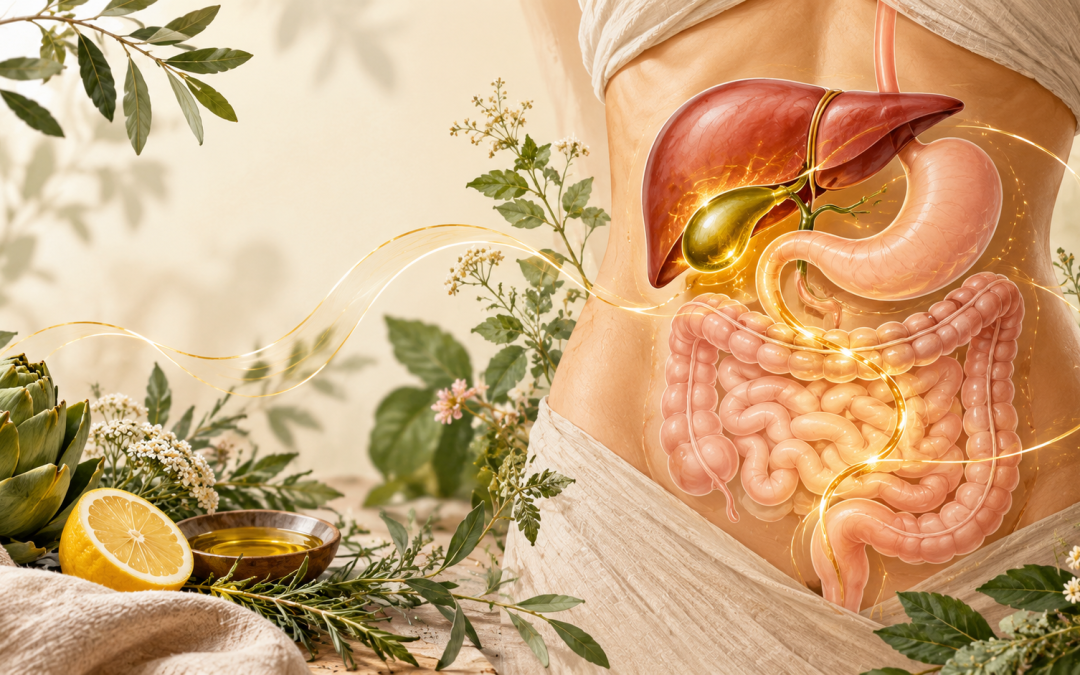
When we think about gut health, we usually think about digestion, stomach acid, digestive enzymes and our gut microbiome.
But there’s another important player that I think deserves far more attention; our gallbladder and particularly BILE!
I first wrote about the gallbladder and its connection with hormones back in 2019, and it’s something I’ve been discussing in my naturopathy practice for many years.
But what I find particularly fascinating is the growing research around bile acids and how they influence not only digestion, but also our gut microbiome, metabolism, thyroid function and hormone signalling.
There’s a lot more going on here than simply digesting fats!
So, what exactly does bile do?
Bile is produced continuously by your liver and stored and concentrated in your gallbladder until it’s needed.
When you eat, particularly a meal containing fat, your gallbladder contracts and releases bile into your small intestine.
Bile helps emulsify (break down) fats, making them easier for digestive enzymes to break down, and supports the absorption of fat-soluble vitamins A, D, E and K. It’s also one of the ways your body eliminates certain waste products, including bilirubin and cholesterol.
But here’s where it gets interesting. Bile acids aren’t simply digestive substances. They’re also powerful signalling molecules, communicating with receptors throughout the digestive and metabolic systems.
And they have a remarkable two-way relationship with our gut bacteria.
The gallbladder and gut microbiome connection
We hear so much about probiotics, fermented foods and gut bacteria, but not nearly as much about bile.
And yet bile acids help shape the intestinal environment and influence which microorganisms are able to thrive.
At the same time, certain gut bacteria transform bile acids into different forms, known as secondary bile acids.
These substances can influence gut function, metabolic processes and immune signalling.
But here’s another fascinating role of bile that often gets overlooked — it’s also part of our gut’s natural defence system!
Bile acids have antimicrobial properties, helping regulate bacterial populations, particularly in the small intestine. They can also influence the production of antimicrobial substances by our intestinal cells.
This is particularly interesting when we look at conditions such as small intestinal bacterial overgrowth (SIBO), where changes in bile acid metabolism may be one of several contributing factors.
And what about parasites? Research is exploring how different bile acids and the metabolites produced by gut bacteria influence intestinal parasites. Depending on the organism, these interactions can either inhibit or support their survival.
So bile doesn’t simply flush out unwanted bacteria or parasites, but it plays an important role in maintaining the balance of our intestinal environment.
It’s a fascinating two-way relationship. Our gut bacteria influence bile acid metabolism, while bile acids themselves help shape the microbiome.
And it’s one of the reasons why, when someone comes to see me with longstanding digestive complaints, I’m interested in far more than which probiotic they’re taking!
Could your thyroid be influencing your gallbladder?
Now this is a connection that many people haven’t heard about.
Your thyroid hormones influence much more than energy, weight and body temperature.
They also play a role in cholesterol metabolism, digestive motility and the regulation of bile acids.
Research has identified associations between hypothyroidism and gallstone disease, with several possible mechanisms involving cholesterol metabolism and the movement of bile through the biliary system.
And we know that constipation and slower intestinal transit are common features of hypothyroidism.
So if someone is experiencing digestive discomfort alongside fatigue, constipation, feeling cold, dry skin or unexplained weight changes, thyroid function may be worth investigating.
Of course, this doesn’t mean everyone with bloating has a thyroid problem or that hypothyroidism automatically causes gallbladder disease.
It’s about considering the wider picture rather than treating each symptom in isolation
Hormones and your gallbladder – what’s the connection?
This is another area I’ve been fascinated by for years.
Oestrogen influences cholesterol metabolism and the composition of bile.
Higher oestrogen exposure, such as during pregnancy or with certain hormonal medications, can increase the risk of cholesterol gallstones.
Hormone therapy is particularly interesting because studies have found differences in gallbladder risk between oral and transdermal oestrogen.
But the connection goes beyond reproductive hormones.
Bile acids interact with receptors involved in glucose regulation, lipid metabolism and energy balance.
And because the liver, intestines and gut microbiome participate in the metabolism and elimination of certain hormones, it’s another reason digestive and hormonal health shouldn’t always be considered separately.
That doesn’t mean gallbladder problems automatically cause hormonal imbalances, but it does show how interconnected our physiology really is.
What about bloating, constipation and digestive discomfort?
Some symptoms that may occur with gallbladder or biliary problems include:
- Pain or discomfort in the upper right abdomen, sometimes after meals
- Nausea, particularly following fatty meals
- Pain that travels towards the back or right shoulder
- Digestive discomfort associated with eating
Bloating, constipation and changes in bowel habits are also common, but they have many possible causes and aren’t reliable signs of poor bile flow on their own.
This is why I always think it’s important to investigate rather than assume.
Sometimes the issue may be related to food intolerances, gut motility, thyroid dysfunction, medication effects or a gastrointestinal condition that needs medical assessment.
And sometimes gallstones or another biliary condition need to be ruled out.
So, how can we support gallbladder and digestive health?
There are some sensible foundations worth considering.
A balanced diet with plenty of plant foods and fibre supports bowel regularity and overall digestive health.
Including appropriate amounts of healthy fats, such as olive oil, nuts, seeds and oily fish, can also support normal gallbladder emptying.
Regular movement, maintaining a healthy weight where appropriate, and avoiding rapid weight-loss diets are relevant to gallstone prevention.
However, I wouldn’t automatically recommend bile salts, bitters or gallbladder-stimulating supplements to someone experiencing digestive symptoms without first understanding what’s happening.
Particularly if gallstones or bile duct obstruction are a possibility.
An individualised approach matters.
What about perimenopause and menopause?
Now, this is where the picture becomes especially interesting for women in midlife.
During perimenopause and menopause, changes in oestrogen, body composition, insulin sensitivity and cholesterol metabolism can overlap with changes in digestive health.
Some women notice more bloating, constipation or changes in how comfortable they feel after meals.
But is it always menopause itself?
Not necessarily!
Thyroid disorders, digestive conditions, medication effects and gallbladder disease can also contribute to symptoms that appear during this stage of life.
And we know that insulin resistance and metabolic health can be relevant to gallstone risk.
This is why I often describe menopause as the great revealer.
For some women, midlife is when previously manageable health concerns become much more noticeable.
That doesn’t mean menopause causes every digestive or metabolic problem. It means it’s worth looking at what else might be contributing.
Looking at the bigger picture
After more than 26 years working as a naturopath, one of the most important lessons I’ve learned is that our body systems don’t operate independently.
Our thyroid, liver, gallbladder, gut microbiome, hormones and metabolism are all connected in fascinating ways.
And while understanding these relationships doesn’t mean every symptom has one underlying cause, it can help us ask better questions and investigate more thoroughly.
If you’re experiencing ongoing digestive discomfort, fatigue or unexplained changes in your health, it’s worth looking beyond the obvious.
Your body may be telling you something that deserves further investigation.
Kate Driver is a naturopath with over 26 years of experience, offering in-person consultations in Glenelg South, South Australia, and online consultations worldwide.
